
Moving to France? 7 Crucial Reasons to Hire a Bilingual Interior Architect for Your Renovation
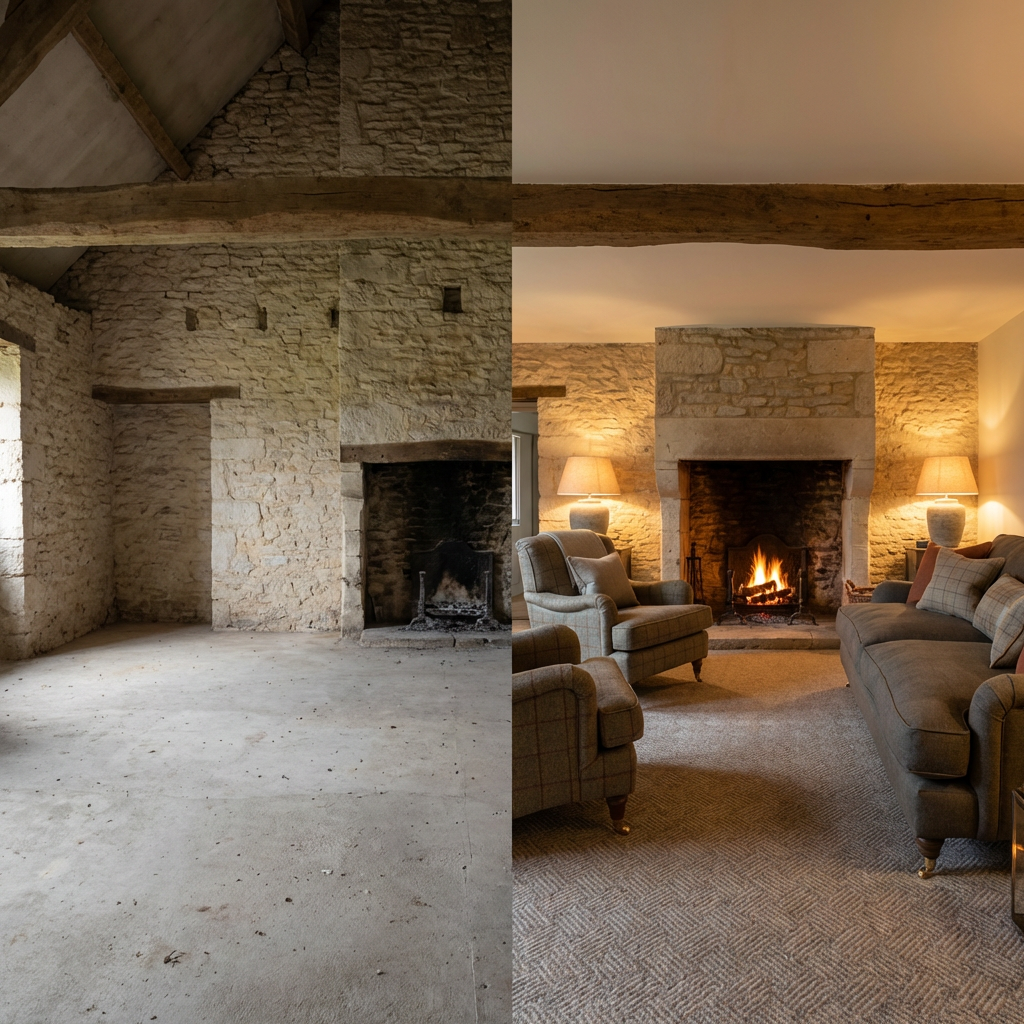
From a cold, empty barn to a "cosy" lounge that blends French stone character with British comfort.
Congratulations! You’ve taken the leap and are moving to France. Maybe it’s a rustic farmhouse in Dordogne, a chic Haussmann apartment in Paris, or a villa on the Côte d'Azur.
The dream is wonderful: morning croissants, leisurely lunches, and a home that is perfectly "you" in the heart of France.
But the reality of turning that dream into a renovated space is often far more daunting than expatriates expect. When you don't know the local building codes, the secret language of the Mairie, or how to tell a reliable maçon from one who will disappear for weeks, that dream can quickly become a costly headache.
As a French-born, fully bilingual interior architect (bicultural in spirit), I bridge that gap every day. Here are seven crucial reasons why hiring a bilingual interior architect isn’t just a luxury… it is an investment in your sanity and your project's success.
1. Deciphering the French Bureaucracy (The "Cerfa" Struggle)
In France, bureaucracy is not just a cliché; it is a way of life, especially in construction. Any modification to your home, from changing a window to adding an extension, requires official approval.
Do you know the difference between a Déclaration Préalable (DP) and a Permis de Construire? Have you read the local PLU (Plan Local d'Urbanisme), which might dictate the exact shade of beige you can paint your shutters?
A bilingual interior architect handles these applications for you. I translate the technical language of your needs into the highly specific, rigid legal language required by the local town hall (Mairie). One wrong box checked on a French form (like the infamous Cerfa forms) can delay your project by months. I navigate this for you.
2. Effective Communication on the Chantier: Translation Goes Beyond Words
You might get by with "Bonjour, ça va ?" in the bakery. But can you discuss the complexities of a chape liquide (liquid screed) versus a chape traditionnelle, the specifications of your doublage thermique (insulation backing), or the difference between placo (drywall) standards?
Mistakes in construction are expensive, and they almost always stem from a failure to communicate.
Hiring a bilingual interior architect gives you one point of contact. You tell me what you want, in English, with all its nuance and detail. I translate that precisely into the technical specifications that the French artisans need. There is zero ambiguity, and I am there on site to ensure they understood.
3. The Vetted Network of Reliable "Artisans"
Finding reliable contractors is often the biggest fear for expatriates. I bridge this gap in two ways:
Established Connections: In regions where I frequently work, you immediately benefit from my trusted network of qualified artisans (plumbers, electricians, masons) whom I know are reliable and deliver high-quality work.
Expert Sourcing: If your project is in a new location, my expertise lies in sourcing and vetting local contractors for you. I know exactly how to verify their qualifications, check their required insurance (the crucial garantie décennale), and interview them to ensure they meet the high standards your project demands. You are never left to guess who to hire.
4. Navigating the Cultural Codes of French Workdays
There is an art to managing a French work site. The culture is different. Did you know that in many regions, lunch from 12:00 to 14:00 is sacred, and almost no work happens during those hours? Did you know that certain times of the year (like the August holidays) mean the entire country effectively stops?
I understand these codes. I know how to motivate the team, how to handle the inevitable delays gracefully but firmly, and how to manage the unique cadence of French labor. My presence as a local ensures that your project is respected by the trade professionals.
5. A Dedicated Partner You Can Truly Trust
Renovating a home is a major emotional and financial commitment. You need more than just a designer; you need a trusted representative on-site who is 100% dedicated to your interests.
Whether you are still in the UK finalizing your move or already in France but overwhelmed by the local complexities, I act as your local partner. I bridge the gap between your vision and the daily reality of the construction site. My role is to ensure that what was agreed upon in English is exactly what is built in French.
Complete Peace of Mind: I am Your "Eyes and Ears"
Misunderstandings on a renovation project can happen in a heartbeat. A bilingual architect provides a layer of security that a standard contractor cannot.
Regular updates: You receive clear, detailed progress reports in English.
Problem-solving: When a technical issue arises (and they always do in old French houses!), I handle the initial stress with the artisans and present you with clear, translated solutions.
On-site presence: You don't need to spend your weekends stressed on a dusty building site. I am there to ensure the quality matches your expectations.
6. Understanding Local Standards and Energy Regulations (RE2020)
French building standards (DTU - Documents Techniques Unifiés) and energy efficiency regulations are strict and evolve constantly. The latest RE2020 regulation has changed how new and significant renovations are approached.
An artisans might know their trade, but an interior architect is trained to look at the whole picture to ensure compliance. Failure to meet these standards can cause issues with your insurance (dommage ouvrage) or when you eventually come to sell the property. I ensure your home is not only beautiful but legally compliant.
7. Budget Management & Cost Efficiency (Avoiding the "Expat Tax")
It is a sad reality that sometimes, if a contractor hears an English accent, the quote might magically increase.
Because I know the local prices per square meter for different types of work, I can immediately spot an inflated estimate. I handle the tendering process, review every line item in the quotes (devis), and ensure that you are paying the correct market rate for the work. My fees are often mitigated by the savings I generate through price negotiation and the prevention of costly, ill-informed mistakes.
Bonus point: Expert Insight: Understanding the "British Way of Living"
Beyond the technicalities, there is the soul of a home. Having a British wife from the West Midlands, I’ve spent years immersed in the British lifestyle and seeing firsthand how "home" feels across the Channel.
I understand that your expectations for a French house might differ from local standards:
The "Cosy" Requirement: While French homes often lean towards tiles and stone, I know the importance of a high-quality carpet (moquette) in bedrooms or the layout of a proper "double lounge."
Functional Flow: Whether it’s the specific way you use a patio as a bridge to the garden or your preference for certain door handles and window openings, I don't just "Frenchify" your project.
The Comforts of Home: I bridge the gap between French architectural elegance and the British sense of comfort, ensuring your renovation feels like a home, not just a holiday house.
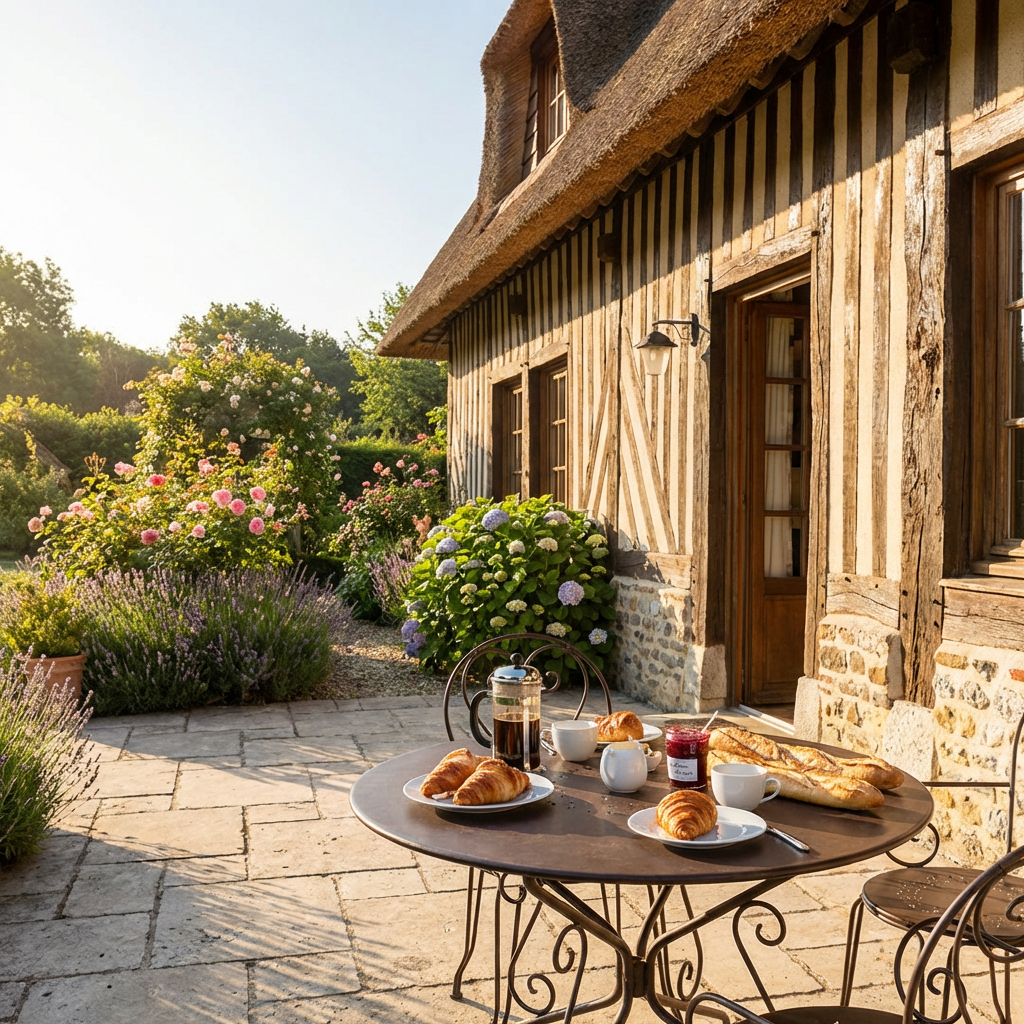
Your first morning in Normandy: fresh croissants, soft sunlight, and the authentic charm of a thatched cottage.
Let's Make Your French Dream Home a Reality (Without the Stress)
You didn’t move to France to learn the intricacies of French property law or to manage a team of builders with a dictionary in hand. You moved here to enjoy the lifestyle.
Hiring a bilingual interior architect is not an admission of defeat; it is a strategic decision to ensure your vision is executed flawlessly, on time, and on budget.
I would love to hear about your project. Let's schedule a free, 15-minute "Discovery Call" to discuss your ideas and how I can help you bridge the gap between your vision and the reality of renovating in France.
Have a project in mind? Share your details below and I'll get back to you to schedule our first discovery call.
